
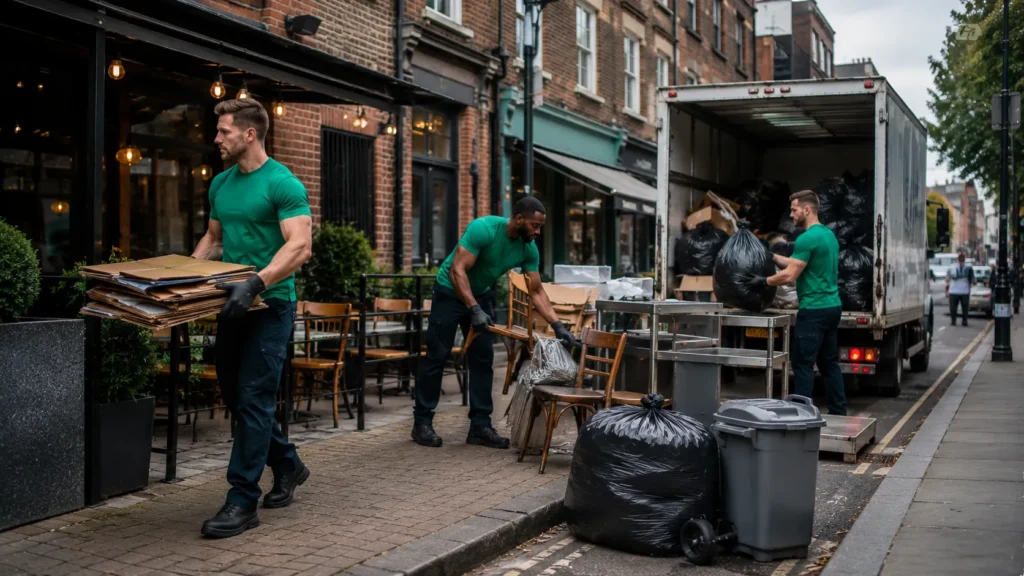
Have you ever wondered what happens to the mountains of cardboard, broken catering equipment, and old furniture generated by busy cafes and restaurants? Waste management is more than just housekeeping for food establishments in Walthamstow. It is a legal responsibility that directly affects business operations, customer safety, and compliance with environmental regulations.
From independent coffee shops near Wood Street to popular restaurants around Walthamstow Market, businesses generate significant amounts of packaging waste, food-related materials, and refurbishment debris. Managing these waste streams properly helps avoid fines, maintains a professional appearance, and ensures smooth day-to-day trading.
Why Is Commercial Waste Management So Important for Walthamstow Food Businesses?
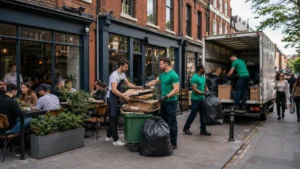
Walthamstow has become one of East London’s most vibrant food destinations. With growing customer demand comes increased deliveries, stock replenishment, equipment upgrades, and occasional renovations.
All of these activities generate waste that cannot be handled in the same way as household rubbish.
When commercial waste is left to accumulate, it can create several problems:
- Storage areas become overcrowded.
- Fire risks increase due to excessive cardboard and packaging.
- Pest infestations become more likely.
- Pavements and customer access points may become obstructed.
- Businesses may face enforcement action from local authorities.
For cafes and restaurants operating in busy locations, maintaining a clean and organised premises is essential for both compliance and customer experience.
What Is Your Legal Duty of Care for Commercial Waste?
Every business owner has a legal responsibility known as the Duty of Care under UK environmental legislation. This duty applies to all commercial waste generated by a business.
The responsibility begins when waste is produced and continues until it reaches an authorised recycling or disposal facility.
This means business owners cannot simply hand waste to anyone willing to remove it. They must take reasonable steps to ensure waste is managed properly throughout the disposal process.
Using Public Bins Is Not Permitted
A common misconception among new business owners is that excess packaging or commercial rubbish can be placed in public litter bins or residential waste bins.
Commercial waste must never be disposed of in these facilities. Public bins are intended for pedestrian litter, while residential collections are funded for household waste only.
Using them for business waste can result in penalties and enforcement action.
Always Use a Licensed Waste Carrier
When hiring a waste removal company, it is essential to verify that they hold a valid Waste Carrier Licence issued by the Environment Agency.
Using an unlicensed operator creates significant risks. If waste is illegally dumped elsewhere, authorities can trace the material back to the original business.
In such cases, the business owner may face investigations, fines, and reputational damage even if they were not directly involved in the illegal disposal.
Keep Waste Transfer Notes
Businesses must retain Waste Transfer Notes for all waste collections.
These documents record:
| Information Included | Purpose |
|---|---|
| Type of waste collected | Confirms what was removed |
| Quantity of waste | Records volume and weight |
| Collection date | Provides compliance evidence |
| Waste carrier details | Identifies authorised collector |
| Disposal destination | Shows legal disposal route |
These records should generally be retained for a minimum of two years and may be requested during inspections or compliance checks.
How Does Packaging Waste Create Daily Challenges?
Packaging waste is one of the largest waste streams generated by cafes and restaurants.
Every delivery brings cardboard boxes, shrink wrap, plastic containers, pallets, and protective materials.
While these materials are necessary for transporting goods safely, they quickly accumulate throughout the working week.
Businesses located in compact premises often struggle with limited storage space. Back rooms become overcrowded, staff movement is restricted, and emergency exits can become partially obstructed.
Large volumes of packaging can also attract unwanted pests if mixed with food waste or left exposed for extended periods.
Many standard commercial waste contracts operate on fixed collection schedules. During busy trading periods, these arrangements may not provide enough capacity, leaving businesses with overflowing bins and limited storage options.
What Should You Do With Broken Commercial Catering Equipment?
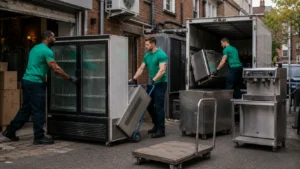
Commercial kitchens rely heavily on specialist equipment including refrigerators, freezers, display units, ice machines, and coffee-making systems.
When these items fail unexpectedly, replacement often needs to happen immediately to prevent disruption to food service operations.
The challenge comes when disposing of the old equipment.
Commercial appliances contain electrical components, metal materials, and in many cases refrigerants that require specialist handling.
Understanding WEEE Regulations
Waste Electrical and Electronic Equipment regulations apply to many commercial appliances used in hospitality settings.
Under these regulations, equipment must be processed through approved recycling channels rather than being placed in general waste streams.
Common items requiring specialist disposal include:
| Equipment Type | Special Handling Required |
|---|---|
| Commercial refrigerators | Refrigerant removal |
| Freezers | Coolant management |
| Ice machines | Electronic recycling |
| Coffee machines | Electrical component recovery |
| Display chillers | Specialist dismantling |
Improper disposal can create environmental risks and expose businesses to regulatory penalties.
Using experienced commercial waste professionals ensures appliances are collected, transported, and recycled in accordance with relevant regulations.
Why Are Refurbishment Projects a Major Waste Challenge?
The hospitality sector is highly competitive.
To remain attractive to customers, many cafes and restaurants regularly update interiors, improve seating areas, install new counters, or undertake complete refurbishments.
Whether moving into a new unit or modernising an existing venue, refurbishment projects generate substantial volumes of waste.
Typical materials include:
- Shop fittings
- Counter units
- Booth seating
- Flooring materials
- Wall panels
- Kitchen extraction systems
- Shelving
- Decorative fixtures
Unlike everyday commercial waste, refurbishment materials are often bulky, heavy, and difficult to move without specialist equipment.
These projects usually operate on tight schedules, meaning waste must be removed quickly to allow contractors and fit-out teams to continue working efficiently.
How Do Professional Waste Clearance Teams Help Hospitality Businesses?
Many Walthamstow businesses choose professional waste clearance services because they offer flexibility and compliance support that standard collections cannot always provide.
Professional teams understand the operational challenges faced by cafes, restaurants, and food retailers.
Rather than simply collecting waste, they help businesses maintain compliance while minimising disruption.
Why Are Out-of-Hours Collections So Valuable?
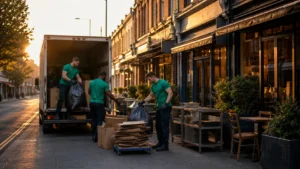
Areas around Walthamstow Market and Wood Street experience significant pedestrian activity throughout the day.
Attempting to load bulky waste during trading hours can create safety concerns and inconvenience customers.
Professional waste teams often provide early morning or evening collection services.
This allows waste to be removed when footfall is lower and businesses are less busy.
Benefits include:
| Advantage | Business Impact |
|---|---|
| Reduced customer disruption | Better customer experience |
| Safer loading operations | Lower accident risk |
| Faster collections | Improved efficiency |
| Less pavement obstruction | Better compliance |
These flexible arrangements help businesses maintain smooth operations while keeping public areas clear.
Why Is a Wait-and-Load Service Often Better Than a Skip?
Traditional skips are not always practical in busy urban locations.
Many Walthamstow businesses lack the space needed to accommodate a skip, particularly on busy high streets or within densely developed commercial areas.
Skip permits may also be required, adding cost and administrative delays.
A wait-and-load service offers a faster alternative.
A waste clearance vehicle arrives at the agreed time, the waste is loaded immediately, and the vehicle departs once the job is complete.
This approach eliminates:
- Skip permit applications.
- Long waiting periods.
- Street space issues.
- Visual impact on customers.
- Potential misuse by third parties.
For time-sensitive refurbishment projects, wait-and-load services can significantly reduce delays.
How Are Commercial Furniture and Fixtures Removed Safely?
Removing bulky commercial furniture is rarely straightforward.
Tables, seating, counters, and catering equipment often need to be moved through narrow corridors, staircases, rear service entrances, or basement access routes.
Attempting to manage these removals internally can create health and safety risks for staff.
Professional clearance teams are equipped to handle:
- Heavy furniture.
- Commercial seating.
- Bar and counter units.
- Large kitchen equipment.
- Storage systems.
- Retail fixtures and fittings.
Their experience helps prevent property damage while ensuring items are removed efficiently.
What Are the Benefits of Staying Proactive With Waste Management?
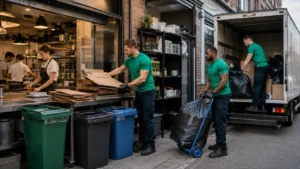
Businesses that take a proactive approach to waste management often experience operational advantages beyond legal compliance.
A well-organised waste strategy can improve workplace safety, increase available storage space, and create a more professional environment for customers and staff.
Additional benefits include:
| Benefit | Outcome |
|---|---|
| Improved safety | Reduced trip and fire hazards |
| Better organisation | More usable storage space |
| Enhanced appearance | Stronger customer perception |
| Regulatory compliance | Lower risk of penalties |
| Faster operations | More efficient workflow |
By addressing waste issues before they become major problems, businesses can focus more effectively on serving customers and growing their operations.
How Can Walthamstow Cafes and Restaurants Simplify Waste Clearance?
Commercial waste management does not need to be complicated.
Working with an experienced, licensed waste clearance provider allows businesses to manage packaging waste, broken equipment, and refurbishment debris efficiently while remaining compliant with legal requirements.
Whether dealing with daily packaging accumulation, replacing faulty refrigeration equipment, or preparing for a complete shop refurbishment, professional waste services provide a practical solution that protects both your business and your reputation.
If your cafe, restaurant, coffee shop, or food outlet in Walthamstow needs fast and reliable commercial waste removal, the team at Rubbish Removal Walthamstow is here to help.
We specialise in clearing packaging waste, old furniture, broken catering equipment, refurbishment debris, and general commercial rubbish for hospitality businesses across E17.
Simply take a photo of the waste you need removed and send it to our team for a free assessment. We provide transparent, no-obligation quotations and can often arrange same-day collections, helping your business stay compliant, clutter-free, and focused on serving customers without disruption.