
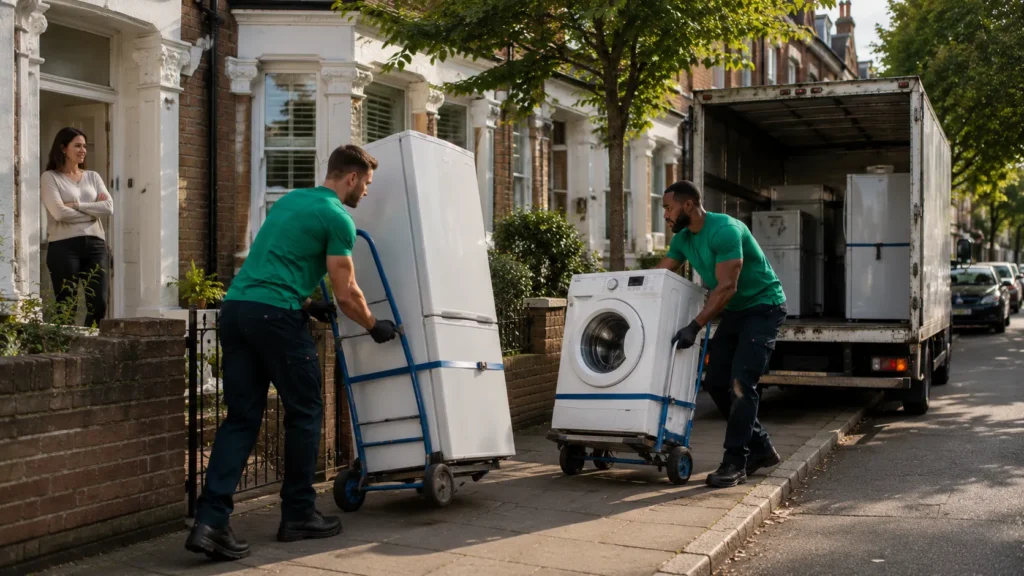
Getting rid of an old fridge, freezer, or washing machine might seem straightforward, but these household appliances are subject to strict environmental regulations. Whether you’re upgrading your kitchen appliances, replacing a broken washing machine, or clearing out a rental property in Walthamstow, it is important to ensure that old white goods are disposed of legally and responsibly.
Many residents are surprised to learn that appliances cannot simply be left on the pavement or placed alongside normal household waste. Due to the hazardous materials contained within many white goods, special handling and recycling procedures are required.
Understanding the legal requirements can help you avoid fines, protect the environment, and ensure your appliance is processed correctly.
Why Are Fridges and Washing Machines Treated Differently?
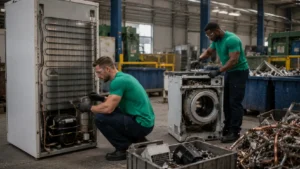
Large household appliances contain materials that require specialist disposal and recycling.
While washing machines mainly consist of metal, wiring, and electronic components, refrigerators and freezers contain refrigerants and insulation materials that can be harmful to the environment if not handled correctly.
For this reason, old appliances fall under Waste Electrical and Electronic Equipment (WEEE) regulations.
These regulations are designed to ensure that electrical items are safely dismantled, recycled, and disposed of through approved facilities.
What Makes Old Fridges a Special Disposal Challenge?
Fridges and freezers contain cooling systems that rely on refrigerant gases.
Although modern appliances use more environmentally friendly substances than older models, these gases still require specialist treatment during disposal.
Improper handling can result in harmful emissions being released into the atmosphere.
Key components that require professional processing include:
| Component | Why It Requires Special Handling |
|---|---|
| Refrigerant gases | Must be safely extracted |
| Compressors | Contain oils and mechanical parts |
| Insulation foam | May contain regulated substances |
| Electrical wiring | Requires specialist recycling |
| Metal casing | Recovered and recycled separately |
Because of these factors, refrigerators should never be dismantled by homeowners or disposed of through unauthorised waste collectors.
Can You Put a Fridge or Washing Machine Outside for Collection?
Many people assume they can simply place old appliances outside their property and wait for collection.
However, this is not always permitted.
Leaving appliances on public land, pavements, or roads without an authorised collection arrangement can be considered fly-tipping.
This can lead to enforcement action and financial penalties.
Even when a collection has been arranged, appliances should only be placed outside according to the specific instructions provided by the collection service.
Will the Council Collect Old Appliances?
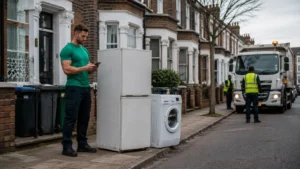
Local authorities may offer bulky waste collection services, but there are often restrictions that residents should be aware of.
In many cases, councils require items to be placed at an agreed collection point outside the property.
This can create difficulties for residents living in:
- Flats
- Upper-floor apartments
- Maisonettes
- Properties without direct street access
- Buildings with communal entrances
Moving a heavy washing machine or fridge from an upper floor to the roadside can be challenging and potentially dangerous without assistance.
Collection availability, waiting times, and access requirements can also vary depending on the property and service demand.
Why Are Washing Machines Difficult to Remove?
Although washing machines do not contain refrigerant gases, they are still classified as electrical waste.
They are also extremely heavy.
A typical washing machine can weigh between 60kg and 90kg, making removal difficult for many homeowners and tenants.
Additional challenges often include:
| Removal Challenge | Potential Risk |
|---|---|
| Narrow staircases | Property damage |
| Tight hallways | Difficulty manoeuvring |
| Upper-floor flats | Manual handling risks |
| Plumbing connections | Water leakage |
| Heavy lifting | Personal injury |
Without proper equipment and lifting techniques, moving a washing machine can easily result in accidents or damage to walls, flooring, and communal areas.
What Happens to Appliances After Collection?
Many people assume collected appliances simply end up in landfill.
In reality, licensed recycling facilities recover a significant proportion of materials for reuse.
During the recycling process, appliances are dismantled and separated into different material streams.
These often include:
- Steel
- Aluminium
- Copper
- Plastic
- Electronic components
- Refrigerants
- Insulation materials
This process reduces landfill waste and helps conserve valuable resources that can be reused in manufacturing.
Why Is It Important to Use a Licensed Disposal Service?
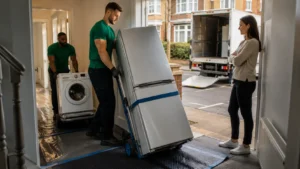
Using a licensed waste carrier is essential whenever disposing of electrical appliances.
Licensed operators transport items to authorised treatment facilities where they can be processed in accordance with environmental regulations.
Hiring unlicensed collectors can create serious problems.
If appliances are illegally dumped and traced back to your property, you may still be held responsible.
A legitimate waste removal company will ensure:
| Service Benefit | Why It Matters |
|---|---|
| Licensed waste transport | Legal compliance |
| Approved recycling facilities | Responsible disposal |
| Safe appliance handling | Reduced injury risk |
| Collection from inside property | Greater convenience |
| Proper documentation | Peace of mind |
This provides reassurance that appliances are being disposed of legally and ethically.
How Can Professional Appliance Removal Make the Process Easier?
For many Walthamstow residents, the biggest challenge is not arranging disposal but physically removing the appliance from the property.
Large fridges, freezers, and washing machines are often located in kitchens, utility rooms, basements, or upper-floor flats where access can be difficult.
Professional appliance removal teams are equipped to:
- Disconnect and remove bulky appliances
- Carry items safely down stairs
- Navigate narrow hallways and entrances
- Protect surrounding property during removal
- Transport appliances to authorised recycling facilities
This saves homeowners from the risks associated with moving heavy items themselves.
What Other Appliances Can Be Recycled?
In addition to fridges and washing machines, many other household appliances can be recycled through specialist collection services.
These commonly include:
| Appliance Type | Eligible for Recycling |
|---|---|
| Fridges | Yes |
| Freezers | Yes |
| Washing machines | Yes |
| Tumble dryers | Yes |
| Dishwashers | Yes |
| Electric cookers | Yes |
| Microwaves | Yes |
| Wine coolers | Yes |
Combining multiple items into a single collection can often be a more convenient and cost-effective option during home clearances or renovations.
Need Fridge Disposal in Walthamstow?
If you need fridge disposal in Walthamstow, appliance recycling in E17, or help to remove an old washing machine in London, Rubbish Removal Walthamstow team is here to help.
Our experienced team safely removes white goods from houses, flats, apartments, and commercial premises, including locations with stairs, limited access, or heavy lifting requirements.
Unlike some collection services that require items to be left outside, we can collect appliances directly from inside your property, handle all the lifting, and ensure they are transported to authorised recycling facilities for responsible disposal.
Simply send us a photo of the appliance you need removed, and we will provide a fast, no-obligation quote. Same-day and next-day collections are often available throughout Walthamstow and the surrounding areas.